
Support Beta Cell Foundation
Learning to live with type 1 takes practice and reinforcement that no single appointment has room for. That’s the part we build, and your support keeps it free.
Fund the diabetes education that actually helps people manage it.
Learning to manage type 1 takes practice, repetition, and time to apply it to your own body. A diagnosis appointment or a class can start that, and no clinic has the hours to carry it much further — the research shows the benefit fades within a few months without something to keep it going.1,2
We build that part: scaffolded courses, interactive tools, instructional design support for the organizations already teaching, and small-group programs where people practice in real conditions. Our education is free for people with type 1 diabetes, and it stays that way because people fund it.
Beta Cell Foundation is a 501(c)(3) nonprofit. EIN 84-4054715. All donations are tax-deductible to the extent allowed by law, and you’ll receive a receipt by email.
We hold a Candid Platinum Seal of Transparency — the highest of four levels, and one held by a small fraction of U.S. nonprofits. See our full profile.
Our donation platform charges no fees, so every dollar you give reaches Beta Cell Foundation.
Donate
Give once, or every month.
One-time, monthly, quarterly or yearly — you choose on the next page.
DonateOpens our donation form on Zeffy, in a new tab.
What we’re building.
A library of courses that teach people how to manage their diabetes.
Scaffolded, self-paced courses that help you understand your own diabetes rather than hand you someone else’s plan. Not prescriptive management strategies or nutrition rules, but the tools to work out what your body does, built around your own goals and how you actually live — and made to grow with you as both change.
Tools that make the invisible visible.
Our Blood Sugar Simulators and logging tools. Nobody can see insulin working — these are the closest thing to watching it happen, and to understanding what your own data is telling you.
Training for the people already teaching.
Health networks, clinics, camps, and nonprofits are already doing this work, usually with more demand than hours and no instructional designer on staff. We work alongside them, putting the same instructional design into their programs that we put into our own. Every organization we work with reaches people we never could directly — it’s the difference between BCF educating thousands and BCF helping change how millions are taught.
Community where the learning holds.
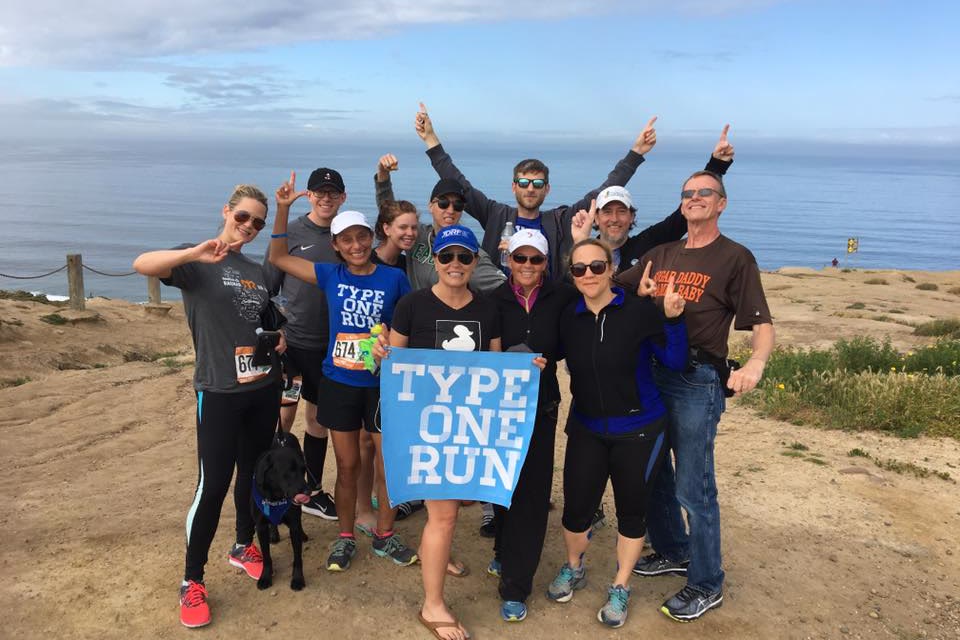
Local run groups, accountability groups, and weekends outdoors where people manage type 1 far from a pharmacy alongside others who’ve solved the same problems. The research is unambiguous that one-time education fades within months.3 This is what makes it stick.
Access, as a design requirement.
Free for the people who need it. Printed for anyone without reliable internet. Translated, so English isn’t the price of admission.
More ways to give.
Give monthly.
A recurring gift is worth more to us than its size suggests. Predictable income changes what we can plan — a course we know is funded is a course we can schedule and finish, and a program with committed support is one we can grow rather than restart.
If you want to be part of this in an ongoing way, monthly is the most useful form it takes.
Does your employer match?
Many companies will double your gift — some triple it — and most employees don’t know the program exists. It usually takes five minutes through your HR or giving portal, and around 65% of large U.S. employers offer one.
Other kinds of gifts.
Some of the most valuable gifts we receive don’t come through the form above.
- Donor-advised funds. Recommend a grant through Fidelity Charitable, Schwab Charitable, Vanguard Charitable, a community foundation, or your own provider. DAF grants often arrive with no contact details attached, so tell us if you’ve recommended one and we can thank you properly and say what it funded.
- Appreciated stock. Often more tax-efficient than cash — you avoid capital gains and can generally deduct the full fair market value. Ask us and we’ll send transfer instructions.
- A gift in your will. Some of our supporters have lived with type 1 for thirty or forty years and want the next person diagnosed to be taught what they had to work out alone. Naming BCF as a beneficiary of a retirement account or life insurance policy is often simpler than amending a will.
- Goods and services. Camping and climbing gear, diabetes supplies, printing, translation, and design work go straight into programs and reduce what we spend dollar for dollar.
For any of these you’ll need our legal name Beta Cell Foundation, EIN 84-4054715, and address 4254 W. 5th Street #7, Los Angeles, CA 90020.
Sources
- Norris SL, Lau J, Smith SJ, et al. Self-management education for adults with type 2 diabetes: a meta-analysis of the effect on glycemic control. Diabetes Care. 2002;25(7):1159–1171. doi.org
- Chrvala CA, Sherr D, Lipman RD. Diabetes self-management education for adults with type 2 diabetes mellitus: a systematic review of the effect on glycemic control. Patient Educ Couns. 2016;99(6):926–943. doi.org
- Powers MA, Bardsley JK, Cypress M, et al. Diabetes self-management education and support in adults with type 2 diabetes: a consensus report. Diabetes Care. 2020;43(7):1636–1649. doi.org